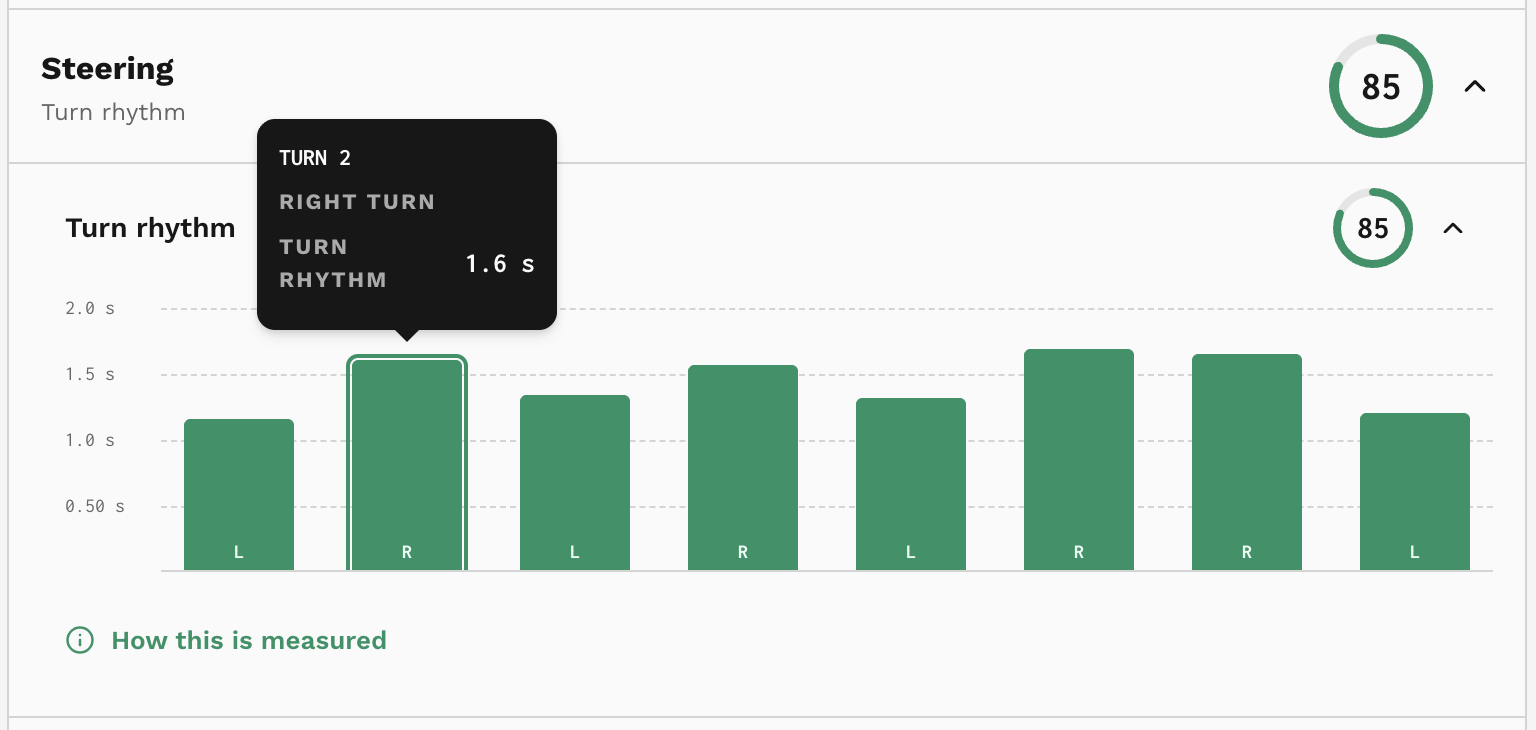
Compare the rhythm of your linked turns and spot changes in timing.
Turn rhythm
Compares complete-turn durations across the clip. More consistent timing scores higher. This is a clip-level rhythm score, with individual turn durations to inspect, rather than a separate score for each turn. Deliberate changes in turn size affect it.
Open Turn rhythm in your steering results to compare the duration of your turns. Select a turn to loop in slow motion and follow the transition with the skeleton overlay to see where your timing changes.
What it means
Steering is not just twisting the skis. It is controlled leg guidance blended with edging and pressure so the skis travel where the skier intends.
Why it matters
Without useful steering, turns can become either locked rails or defensive skids. Good steering helps manage speed, line, and adaptability across terrain.
Good vs problematic movement
Good movement shows the legs guiding the skis while the torso stays relatively disciplined. Problematic movement may show upper-body rotation, an inside ski wandering away, or a tail push at the end of the turn.
How Poser can visualize it
Skeleton overlay can make leg rotation and body rotation easier to separate. Head-tracked replay helps compare whether both legs guide the skis in a similar rhythm.
What to look for
Watch the transition and the first half of the turn. If the shoulders start the turn before the legs, the skier may be rotating rather than steering cleanly.