
G-force
Explore estimated loading through the turn with G-force and the replay. Video-based estimates provide movement context; they are not a direct measurement of force under each ski.
Explore G-forcePressure is how the skier manages force through the skis as the turn develops and releases.
Explore how loading builds and releases as you move through a turn.
Explore estimated loading through the turn with G-force and the replay. Video-based estimates provide movement context; they are not a direct measurement of force under each ski.
Explore G-force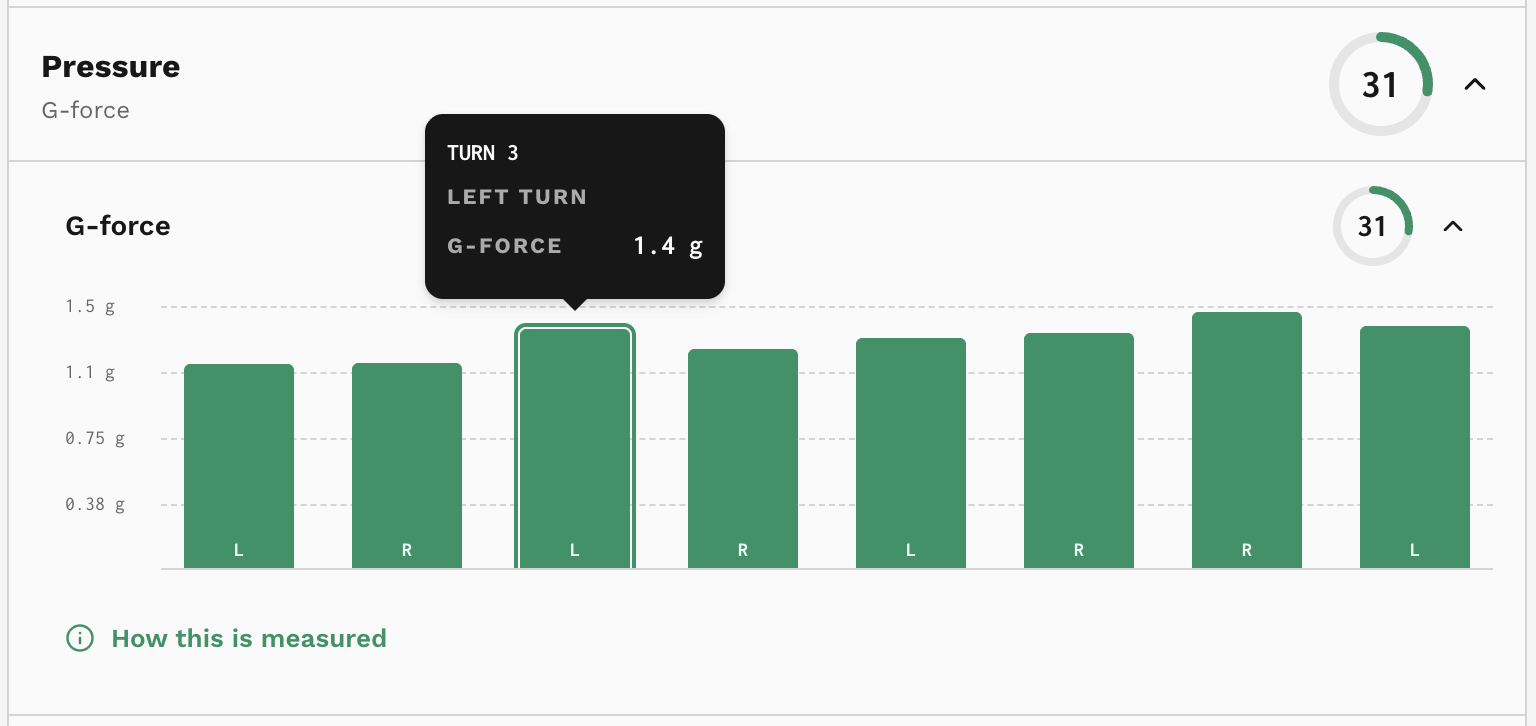
Open G-force in your pressure results to compare loading across turns. Loop a turn in slow motion, then inspect the movement with the skeleton overlay as pressure builds and releases into the next turn.
Pressure changes throughout a turn. The skier manages it with balance, edging, flexion, extension, and timing rather than simply pushing harder.
Useful pressure bends the ski and supports direction change. Poor pressure timing can create rushed finishes, defensive braking, or a turn that never develops a stable platform.
Good pressure often builds smoothly and releases clearly. Problematic movement may show a heavy late brace, a back-seat finish, or pressure that disappears before the skier can guide the ski.
Poser cannot feel force through the snow, but replay can show movement patterns that often accompany pressure timing: flexion, extension, hip path, and the moment the skis redirect.
Pause near the fall line and the finish of the turn. Ask whether the skier appears stacked over the outside ski and whether the release into the next turn is smooth or abrupt.
Try it on your skiing
Upload a short ski clip to explore G-force within your Pressure element. Loop a turn and inspect the movement with the skeleton overlay.
~2 min · 1 free clip