Your analysis
What Poser gives you today
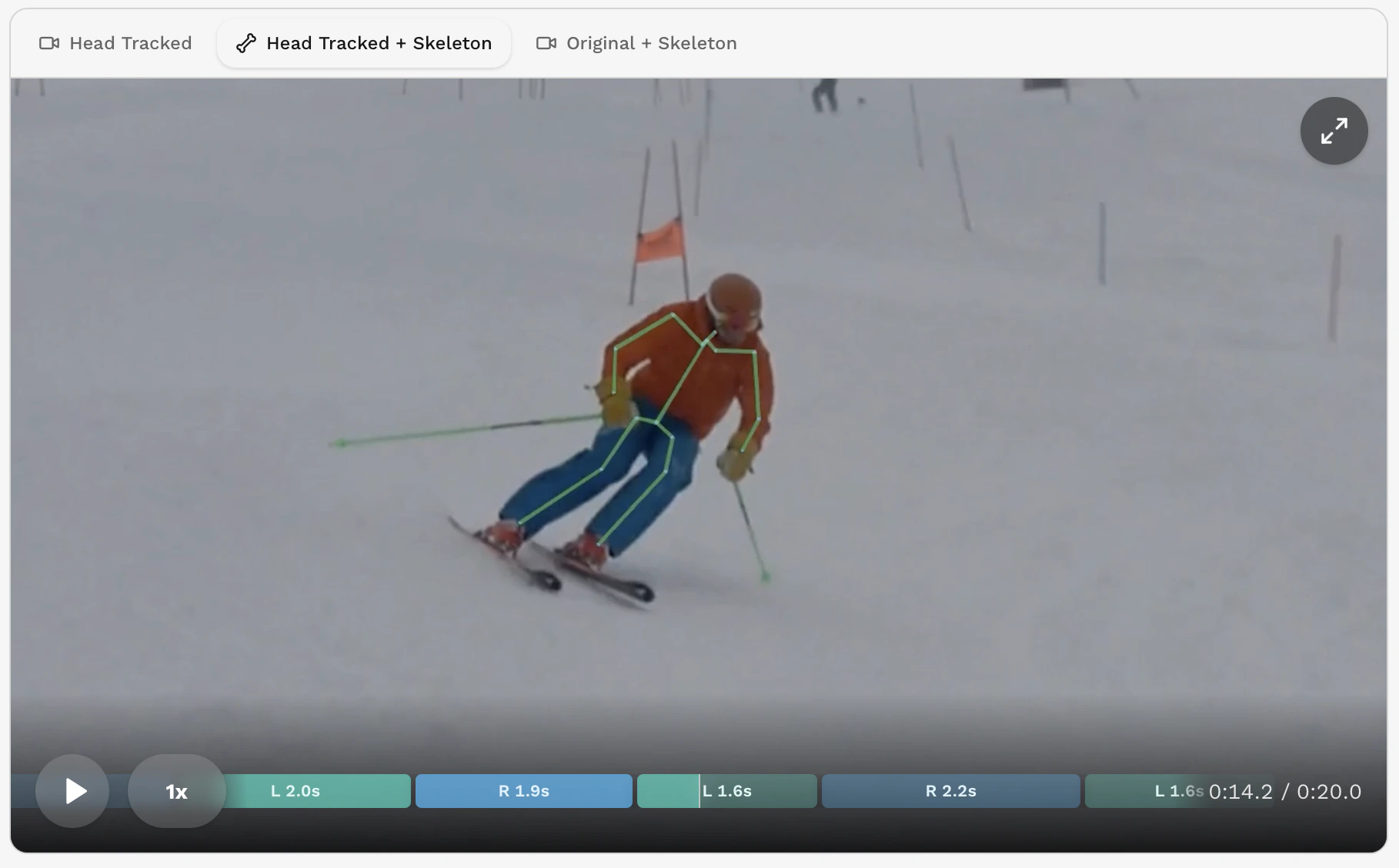
After upload, Poser asks you to trim the useful part of the clip to a maximum of 20 seconds. The analysis pipeline uses artificial intelligence (AI) to track the skier through the run, estimates body pose in 3D using AI, and produces views such as a head-tracked replay and a skeleton overlay.
Poser also calculates turn segments, which side each turn is on, and the duration of each turn. A transition is detected when the skier's center of gravity crosses the midpoint between the feet and the skis reach a minimum edge angle.
Poser analyzes Balance, Steering, Pressure, and Edging from a short ski video.
Ski elements are derived by measuring ski metrics within each ski element category. You can explore metrics such as Hands forward, Stance width, Turn rhythm, G-force, Angulation, and Edging Similarity alongside your replay.
Those outputs are designed to make the video easier to read. Keeping the skier centered helps you inspect the same movement across the turn instead of chasing a fast subject across the frame. The skeleton overlay makes shoulder line, hip movement, stance width, and body angles easier to discuss.
Replay
Replay controls
Choose Head-tracked, Middle, or Full frame, switch the skeleton overlay on or off, and slow the replay down. Open a metric and select a turn to loop it at quarter speed; pause to inspect the position.
Filming
How to film for better results
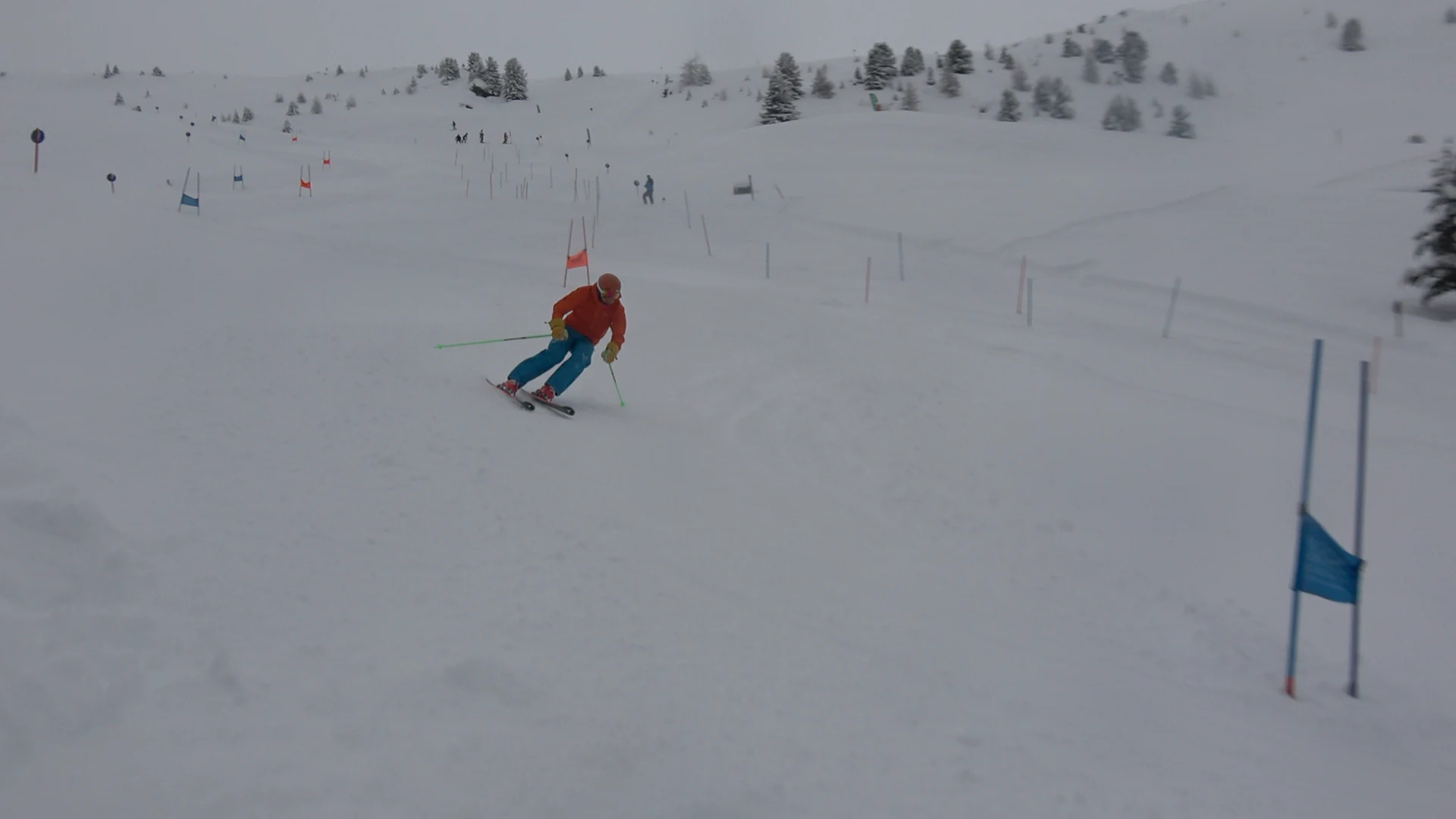
First, ski toward the camera. Have the person filming stand still below you and ski toward them. Front view is the best first priority because the upper body, hands, legs, boots, and skis are visible at the same time.
Second, make the skier large in the frame. Use optical zoom when available, or digital zoom when the alternative is a tiny skier. The practical test is whether you can see the upper body, legs, boots, and skis without guessing, while still keeping the whole skier in frame.
Third, keep the skier's contours clear. Avoid filming straight into the sun or against backgrounds where the skier becomes a silhouette. Good contrast and visible body shape matter a lot.
Your technique
When the scores are useful
Ski Elements scoring is designed for linked parallel turns on groomed terrain. Assessment needs at least three complete turns with both directions represented, and each scored metric needs enough reliable measurements. Missing evidence stays unavailable. Use the scores to choose a turn to review, then judge the movement in context.
The elements describe different parts of your skiing. Getting good at all of them is what makes an advanced skier.