
Both skis
Build edge together
The inside ski tips with the outside ski, not after it.
Edging similarity, often called edge similarity, is about how well your inside ski and outside ski build edge together as a turn develops. It's a core edging skill — here's what it is, why it matters, and how Poser measures it from a ski video clip. Among the four ski elements, Edging Similarity is under Edging.
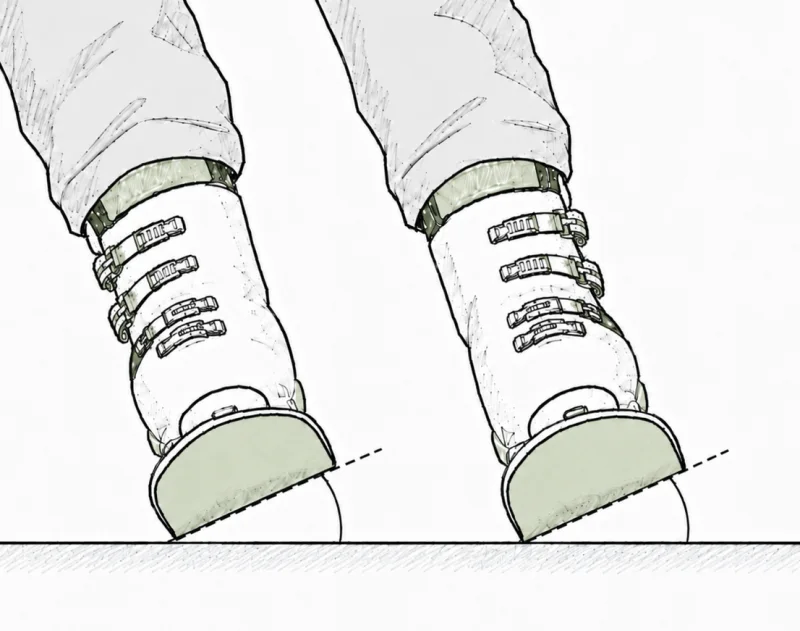
Both skis
The inside ski tips with the outside ski, not after it.
Turn build-up
From transition on toward the apex of the turn.
Edging similarity describes how well your inside and outside skis release, tip, and build edge together as a new turn develops. Coaches may describe the same idea as coordinated edging, an active inside ski, matching shins, parallel lower legs, or both skis tipping together.
It does not mean both skis carry the same pressure. In most strong turns, the outside ski is still the main platform. Edging similarity asks a different question: Is the inside ski also active enough to help both skis work as a pair, or is it staying flat, late, or disconnected?
When edging similarity is good, both skis build compatible edge angles at a similar time and pace. The turn usually feels cleaner, rounder, and easier to repeat on both sides.
The goal is not perfectly identical skis. The goal is that the inside ski is active enough that both skis release, tip, and build edge in a coordinated pattern.
A ski turns most cleanly when it's tipped onto its edge and allowed to bend into an arc. The ski's sidecut helps shape the path for you — but only if you give it enough edge, steering, and pressure to work.
Good edging similarity lets you build that platform earlier and more smoothly. The outside ski stays the main platform, while the inside ski keeps your body organized over the turn. When both skis build edge in a similar way, the turn feels cleaner, rounder, and easier to repeat on both sides.
Weak edging similarity often shows up when the outside ski starts gripping while the inside ski stays flatter or joins late. From the outside, that can look like an A-frame, a small stem, a passive inside leg, a rushed finish, or a turn that has to be rescued late instead of shaped smoothly from the top.
Good edging similarity
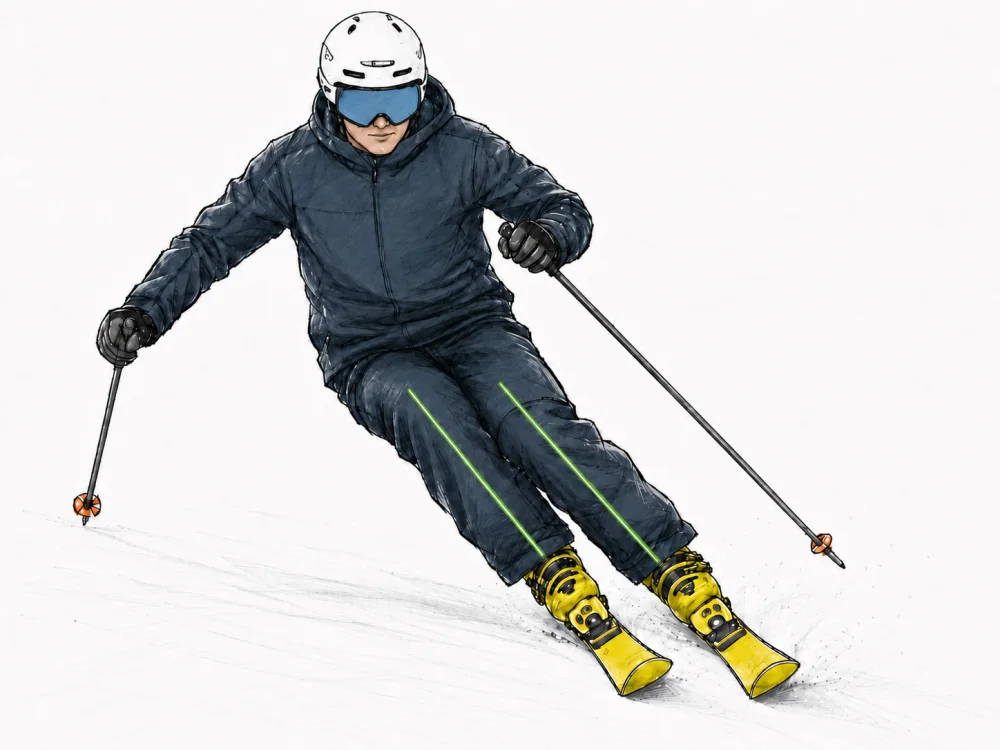
Just after transition, the feet and legs start building the new edge. The new inside ski tips with the outside ski. It doesn't have to be symmetrical — the outside ski can still dominate somewhat — but the inside ski stays connected. Watch the lower legs: if both move into the new turn with a similar pace, the edge angles are matching.
Poor edging similarity
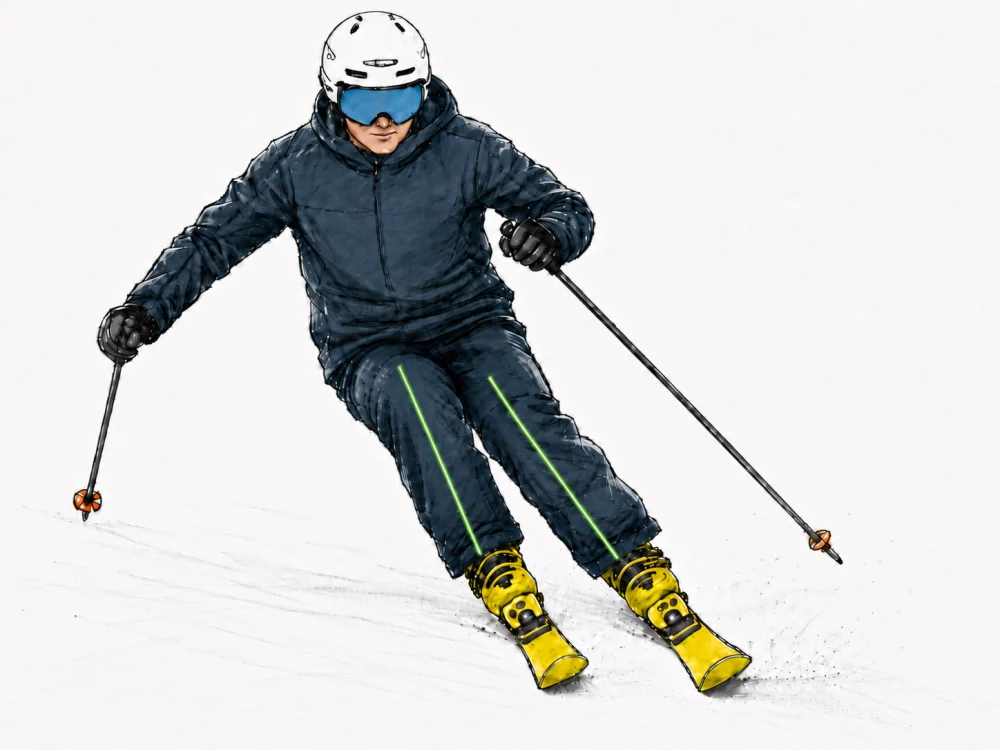
The outside ski starts edging and gripping while the inside leg stays more upright and passive, only joining once the outside ski has taken over. It's rarely one fault — it can hint at a passive inside leg, over-countering, dumping hips, or simply a stem turn, and it might show up more on one side than the other.
Both skis roll smoothly from the old edges to the new edges. The outside ski feels strong, but the inside ski does not feel dead, trapped, or late. The turn starts shaping earlier instead of all the work happening at the bottom.
One ski does the work while the other catches up. The top of the turn feels vague, then the bottom feels rushed. You may feel like you have to brace, push the outside ski away, or quickly recover balance before the next turn.
Poser estimates edging similarity from your ski video clip by comparing how the inside and outside skis build edge during each detected turn.
From the 3D skeleton, Poser reads the edge-building pattern of each ski and combines four signals into a single 0–100 score for each complete turn. A higher score means the skis built edge in a more similar pattern. It doesn't mean the turn was perfect — only that the two skis built edges as a pair.
Edging similarity score, turn by turn
Illustrative scores: each bar is a measured complete turn, left or right. Ski Elements uses the assessed complete turns across the clip, not a selected best-turn window.
Poser measures edging similarity during the turn-building phase — after the transition and on toward the apex of the turn.
That's where the new edges should come on and the ski should begin shaping the arc and build pressure. If the inside ski is late here the skier is often less organized for the shaping phase: the outside ski may take over while the inside leg blocks, flattens, or catches up late. So for edging similarity Poser doesn't weight the whole turn equally; it focuses on the early-to-middle turn-phase where edging similarity is most important to get right for good turn.
No. Edge angle is how much a ski is tipped. Edging similarity is whether the inside and outside skis build edge together at a similar amount and rate.
The outside ski usually gives you the main platform, but the inside ski helps decide whether that platform is clean. If the inside ski stays flat, your legs form different edge angles and the skis try to travel on different paths. If the inside ski tips with the outside ski, the skis are more likely to travel on compatible arcs, and your body has more room to move inside the turn without collapsing or bracing.
No. Terrain, snow, turn type, and camera angle all matter — a brushed short turn, a bump turn, or soft snow won't reward the same edge-building pattern as a clean groomer. Treat a low score as a prompt to inspect the replay, not a final judgment.
Try it on your skiing
Upload a 10–20 second front-view clip with linked turns. Explore Angulation and Edging Similarity within your Edging element, then loop a measured turn with the skeleton overlay.
~2 min · 1 free clip